Why Everything Feels Short-Term Right Now (And Why That’s Dangerous)

Lately, it feels like everything has collapsed into the present moment.
So many of us are tired and inwardly focused, tending and caring for our innermost circles. We are becoming conditioned to thinking in weeks, not years, and in many cases not even that—just whatever gets us through the next meeting, the next bill, the next small crisis. Long-term plans feel almost embarrassing to talk about out loud, like it’s tempting fate just by imagining them.
And to be clear, thinking this way doesn’t make us stupid or weak; it’s what makes us human.
When the future stops feeling reliable—when institutions wobble, politics rot in public, the climate does whatever the hell it’s doing, and the information firehose never shuts off—we contract and pull back to what feels controllable. It’s a survival response.
The problem is that survival mode, when it becomes the default, quietly rewrites what we believe is possible.
What I keep noticing is how extreme the short-term thinking has become. Not just “I’m not sure where I’ll be in five years,” but “I genuinely can’t think past the next few months without feeling like it’s a pointless thought experiment.” And when enough people feel that way at the same time, something dangerous happens: the future doesn’t disappear, it just gets handed over to whoever is still willing to think about it and turn that thinking into action.
I’ve seen this play out before. Let’s take housing as an example.
In 2008, during the housing crisis, I could have bought a small property, but I didn’t act. Instead, I watched, I hesitated, telling myself I’d move once things were clearer. They never really got clearer—rents just went up, and up, and up, and I paid for that hesitation in a very boring, very expensive way: years of lost equity.
In 2020, during COVID, I made the opposite decision. Everything felt uncertain and uncomfortable, but interest rates were historically low and I had this very loud internal sense of do it now—and so I bought a condo. That decision wasn’t about being brilliant; it was about recognizing that the cost of inaction was higher than the cost of acting imperfectly. If I had waited, the opportunity window would have closed and I would have been priced out.
Those moments taught me something I don’t think we talk about enough: in periods of disruption, the real risk isn’t making the wrong move, but rather making no move at all.
Crisis periods create quiet reset windows. Institutions age out, power structures strain. Old assumptions loosen just enough that movement becomes possible, not because it’s easy, but because fewer people are willing to tolerate the discomfort of acting while everyone else is waiting for the fog to clear.
And right now, a lot of people are waiting.
Waiting for politics to stabilize.
Waiting for the economy to make sense again.
Waiting for the world to stop feeling like a low-grade emergency (which, honestly, might be a long wait).
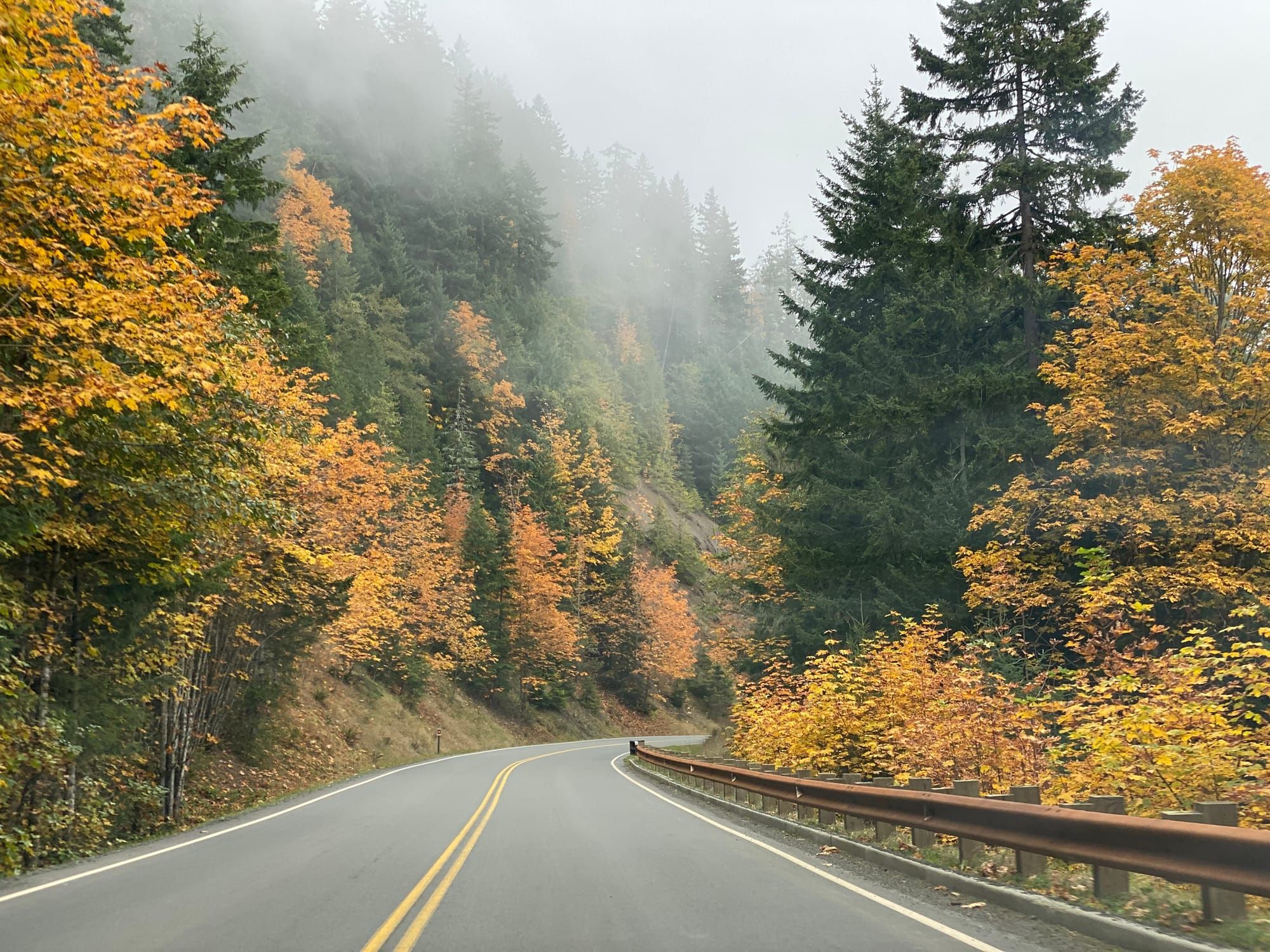
The thing is, the fog doesn’t usually lift all at once. It thins in patches, and if you’re staring at your feet the whole time, you miss the exits entirely.
I think part of what makes this harder is how retreat has been rebranded as wisdom.
There’s a flavor of self-care, personal growth, and even coaching culture that leans very heavily on acceptance: focus on what you can control, let go of what you can’t, be content with where you are. None of that is wrong, exactly. But when acceptance turns into disengagement, it starts functioning less like insight and more like a sedative.
At a certain point, “just be okay with things” becomes a way of staying asleep while the world is being actively reshaped by people who are very much awake, very strategic, and sometimes not particularly ethical. Growth turns private, responsibility gets outsourced, and civic engagement becomes optional. And then everyone wonders why things keep getting worse.
What’s uncomfortable is that the moments that feel least friendly to long-term thinking are often the ones that demand it the most.
We’re living through rapid technological acceleration, information systems that reward outrage over accuracy, aging leadership clinging to relevance, and environmental realities that do not give a shit about our attention span. Responding to all of that with purely short-term thinking is like trying to navigate a storm by staring at your phone and hoping someone else is steering.
This isn’t a call to recklessness, or hustle culture, or manifest-your-dreams bullshit. It’s a call to orientation and to action.
Who is still building? Who is still planning? Who is still willing to move without guarantees?
Because whether we like it or not, those people are shaping what comes next—not because they’re certain, but because they didn’t opt out.
The question we need to ask ourselves isn’t “What’s the safest choice?”
It’s “Where am I postponing my future because I’m waiting for clarity that may never actually arrive?”
Short-term survival might feel necessary right now. I get that, truly. But if it becomes the only mode we allow ourselves, we don’t end up protected—we end up irrelevant.